First Draft, Pun Intended
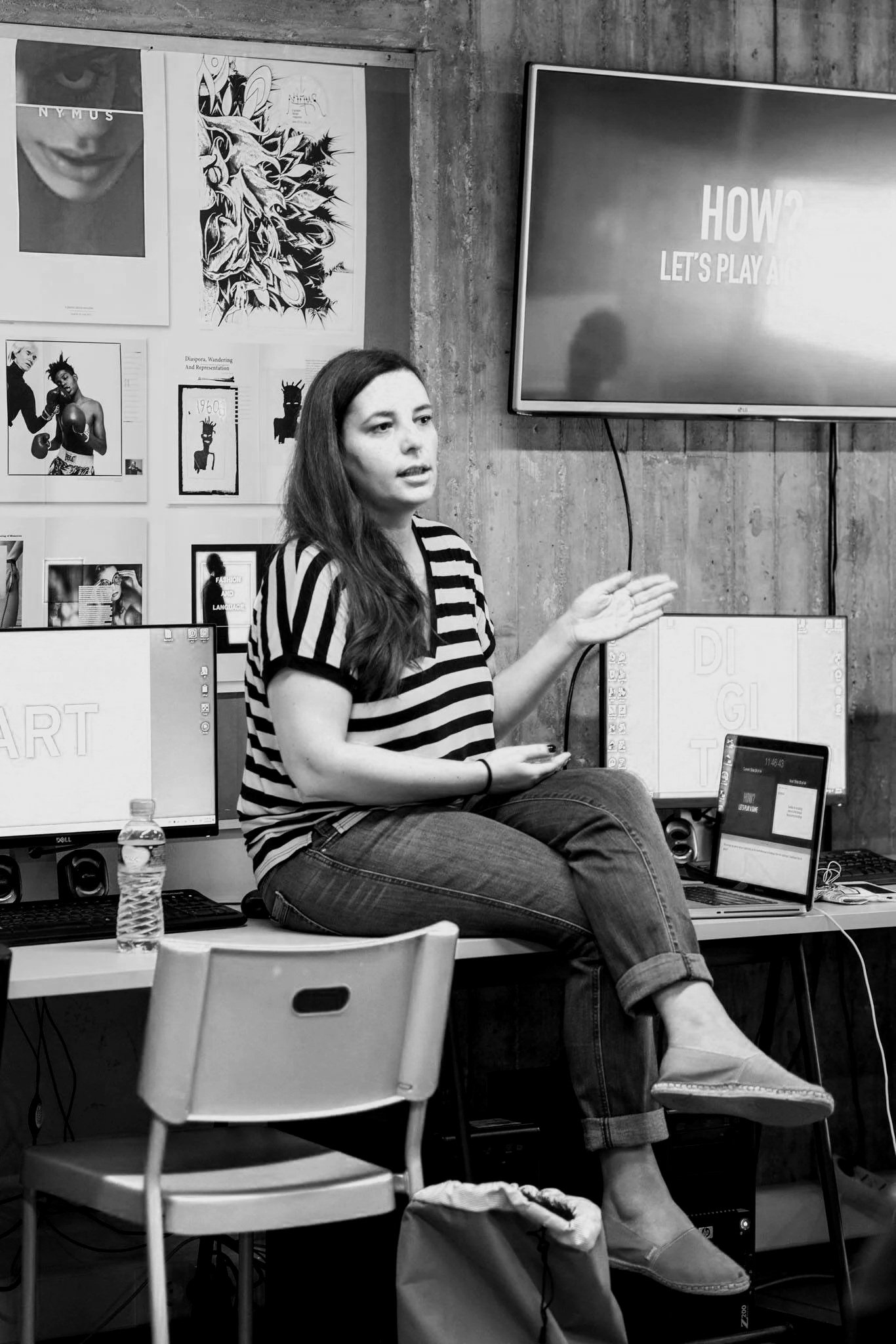
Let me be honest with you from the first sentence.
I have been meaning to start this blog for approximately ten years. In that time, I have designed websites for other people, taught hundreds of students how to communicate ideas clearly and with intention, facilitated workshops specifically about the value of getting things out of your head and into the world and somehow, simultaneously, found every possible reason not to do this particular thing myself.
The briefs were always a little too full. The semester always a little too demanding. The moment never quite right. I had notes, of course. Dozens of them. Fragments of things I had observed in the classroom or the workshop room or a client meeting that felt worth writing down. Half-formed thoughts about design education and what it gets right and what it consistently, stubbornly gets wrong. Opinions about AI tools that I was sharing with students and colleagues but not, apparently, with anyone else. A fairly large quantity of observations about imposter syndrome, portfolio building, creative burnout, and what it actually means to design for people — observations that lived, until now, in a series of notebooks that my students will never read.
This, I am aware, is an extremely ironic position for a person who teaches others to ship things before they are perfect. My students would and regularly do find this hilarious. So. Why now?
A few reasons, and I will be straightforward about all of them. The first is that I built the website gchryssa.com and it felt dishonest to have a blog section called Margins sitting there without anything in it. Empty menus are a UX problem. I teach this. I could not, in good conscience, ignore it on my own website.
The second is that I have been teaching long enough now, ten years of the professional course, several more of university programmes at Vakalo, to have things I actually want to say. Not things I think I should say, or things that would look good in a post, or things that would position me strategically as a voice in the field. Things I genuinely think, based on years of watching designers learn and struggle and break through and give up and come back and eventually make something they are proud of. That is the kind of writing I want to do here, and it took a while to feel confident enough in the material to begin.
The third reason is the most honest and probably the least flattering: a student told me to. She had been in my professional course the previous year. She sent me a message that said, roughly: "You keep saying things in class that I write down because they are the most useful things I have heard about design, and I am fairly certain no one else is hearing them. This seems like a waste." She was right. It was.
Here is what Margins is. It is a blog about design, but not the kind of design blog that is primarily about aesthetics, or tools, or trend reports, or the fifteen things you need to know about the 2026 UX landscape that you will have already scrolled past by the time you finish reading the headline. Those blogs exist. Some of them are excellent. This is not that.
Margins is about the space around the work. The thinking that happens before a designer opens Figma and after they close it. The conversations that occur in classrooms, workshop rooms, and hallways. The moments where something small becomes clear, where a student articulates something out loud for the first time, or a workshop participant realises that the thing they thought was a technical problem is actually a human one. The stuff that does not make it onto a slide.
I will write about teaching because teaching is where most of my thinking happens, and I have been doing it long enough to have strong views about what works and what we are consistently getting wrong. I will write about workshops, about what happens in a room when a team stops performing competence and starts doing the exercise. About creativity as a professional practice rather than a personality trait. About design thinking as something that lives in the body, not just the process diagram.
I will write advice for students, not the inspirational kind, which I find mostly useless, but the specific, honest kind, based on the patterns I have watched repeat across ten years of cohorts. About portfolios and imposter syndrome and the particular despair of November and what to do with your summer if you have run out of obvious things to do with it.
And occasionally I will write about the industry, about AI and what it is actually doing to design education, about what employers want in 2026 or later, that they are not saying clearly, about the gap between how design is talked about and how it is practised.
None of it will be comprehensive. Margins is not a resource centre. It is closer to a notebook, the kind I have been filling for ten years and failing to share. The kind where the handwriting gets messier toward the end of a thought, which is usually where it gets interesting.
A word on the name. Margins are where the real thinking happens. In a document, in a book, in a lecture hall, the centre is for the official version of things. The margins are where you write the question you didn't ask out loud, the note you made to yourself that you haven't followed up on yet, the alternative interpretation that didn't make it into the final draft.
Design, at its best, works the same way. The official version, the polished interface, the resolved layout, and the finished case study are important. But the thinking that produced it, the iterations that were abandoned, the decisions that were made under uncertainty, and the ones that were made badly and corrected, that is where the discipline actually lives.
That is what I want to write about. The margins. Thank you for being here at the beginning. I will try to make it worth the bookmark.
And if you have been waiting for me to start a blog as long as I have been meaning to start one, I am sorry it took this long. I was busy telling other people to ship things before they were perfect, apparently.
Chryssa