Teaching something you are still learning
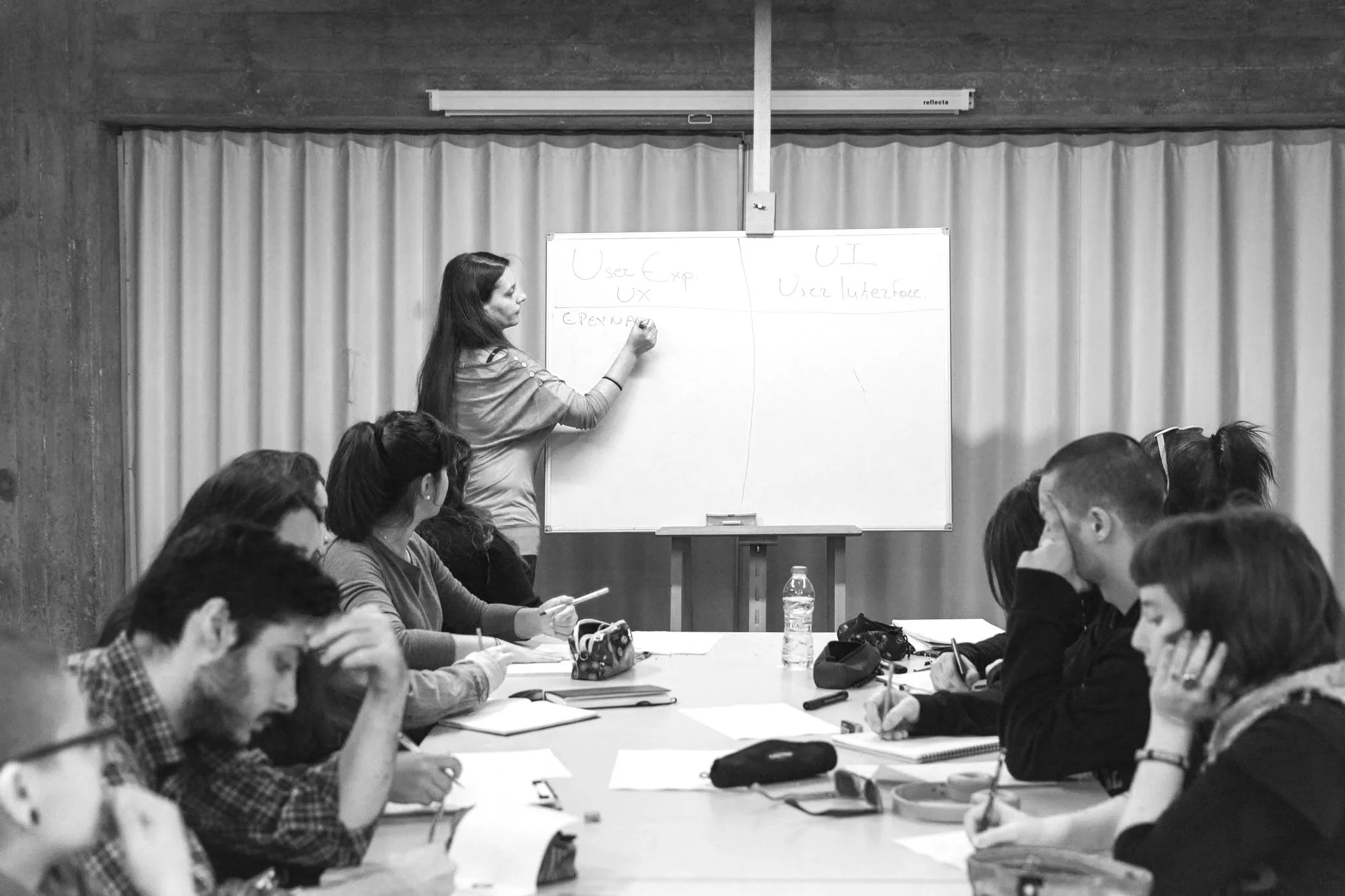
There is a version of teaching that presents itself as complete. The expert at the front of the room. The knowledge is transferred in one direction. The implicit contract: I have been here before, and I will show you the way. I have never been comfortable with that version.
Not because expertise does not matter, it does, and the pretence of false modesty serves no one. But because design, more than most disciplines, is a field in which the most honest thing an experienced practitioner can model is the act of not yet knowing. Some of what I teach, I am still working out. The tools are the most obvious example.
I taught in Photoshop for years. Not because it was the right tool for interface design, it was not, and everyone working in it knew it, but because it was what existed, and you build fluency in what exists. Then Adobe XD arrived, and there was a period of genuine transition: rebuilding muscle memory, relearning shortcuts, finding the new logic underneath what looked like a familiar surface. I was learning it while teaching it. Not pretending otherwise, but actually working it out in real time alongside students who were encountering it for the first time.
Then Figma. And the transition was different, not just a new interface, but a new way of thinking about design as something collaborative, live, shared. A file that multiple people could be inside simultaneously. A workflow that assumed handoff was not an event at the end but a condition throughout. The implications for how I structured briefs, how I set up feedback sessions, how I thought about the relationship between design and development, all of it needed to be reconsidered.
I was not ahead of my students on all of it. Some of them moved into Figma faster than I did, with less attachment to the previous way of working. That is its own kind of lesson: that experience carries weight, but it also carries habit, and habits resist the very changes that would improve the work.
Watching students adopt a tool you are still learning teaches you something about learning itself, about where resistance comes from, and what it costs.
Then the pandemic happened, and the tool problem became secondary. The students who arrived after 2020 were different in ways I am still trying to fully understand. Not less capable, that would be the wrong reading entirely. But shaped by a different relationship to attention, to presence, to the rhythm of a working day. They had spent a formative period of their education in rooms that were also bedrooms, in classes that were also recordings, in a version of learning that was deeply isolated even when it was technically social.
The briefs I had written before no longer quite fit. Not the design problems themselves, those remained relevant. But the assumptions underneath them: that students would naturally collaborate if given the opportunity, that peer feedback would happen organically, that the energy of a room would carry people through the harder parts of a project. Those assumptions had quietly stopped being true for a significant number of people sitting in front of me.
So I started rewriting briefs, not the objectives, but the conditions. Building in more explicit structure around thinking and attention. Designing for the reality that some students were rebuilding social confidence at the same time as they were learning design. Creating moments of low-stakes exchange before asking for high-stakes critique. This was not something I had been taught to do. It was something I worked out by paying attention to what was and was not landing, which is, in the end, the same process as design
This is what I mean when I say I am still learning what I teach. Not the foundations, those are mostly settled. But the edges, the places where the context has shifted, and the old approach no longer holds, those I hold with less certainty than I am perhaps expected to. And I have found, over years of standing in front of rooms, that this uncertainty, when it is named rather than concealed, is one of the most useful things I can offer.
It gives students permission to not know.
That permission matters more than it sounds. A significant amount of what slows students down is not a lack of skill but a belief that confusion is a sign of inadequacy, that the people ahead of them have long since resolved the questions that still feel urgent. They have not. The questions get larger, not smaller. They become more interesting, but they do not go away.
Teaching something you are still learning requires honesty about where the edges are. It requires the discipline not to present a tidy version of a messy reality. It requires trusting that a student who sees you thinking, genuinely, visibly, without performance, will learn more from that than from a polished answer to a question you have not asked in years.
The tools will change again. The students will continue to arrive shaped by experiences I did not have. The briefs will need to be rewritten. And I will be working it out as I go, which is, I have come to believe, not a limitation of teaching.
It is the condition of doing it honestly.