At the end of the year
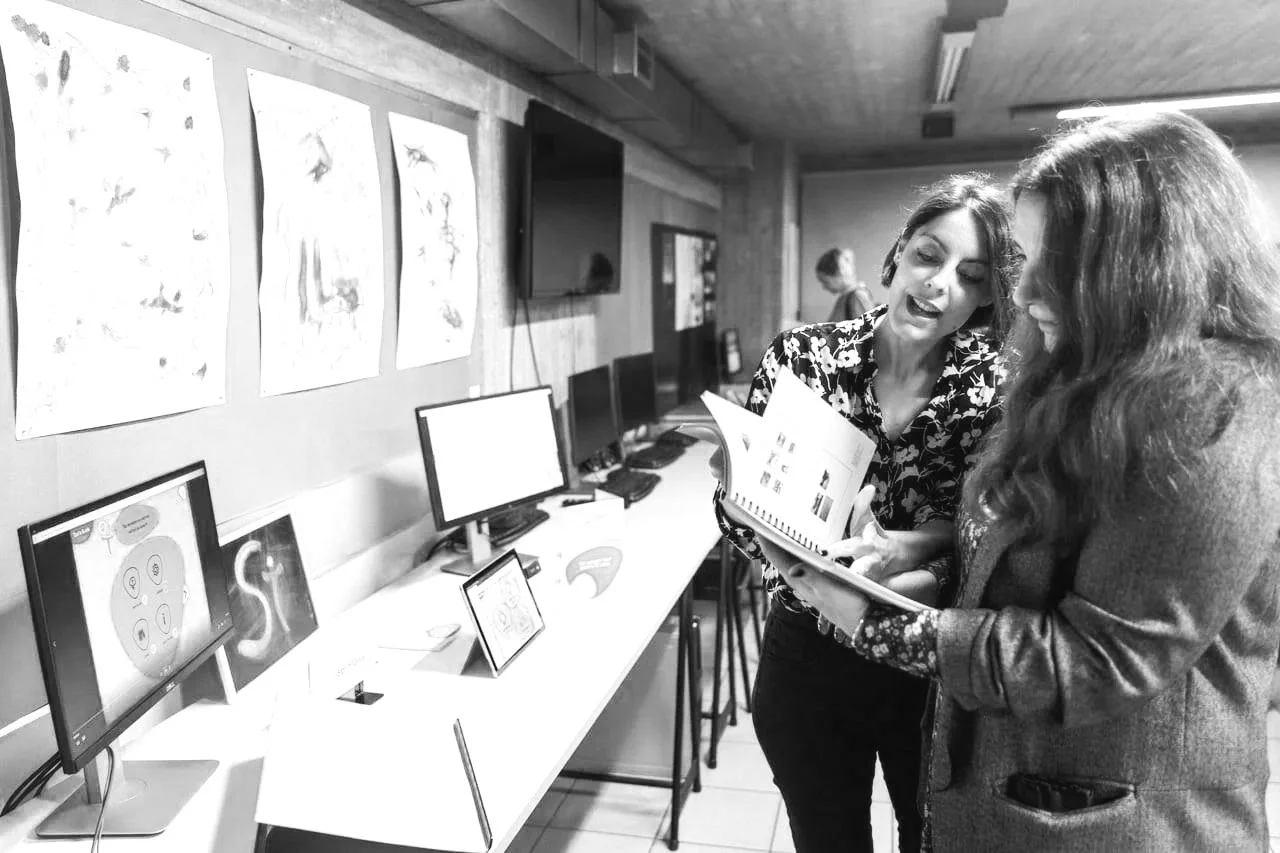
There is a particular atmosphere in the room at the end of the year.
The work is finished, or as finished as it will be. The deadlines have passed. The presentations are done. The all-nighters have been survived, some more gracefully than others. What remains is something quieter. A collective exhale. And underneath it, something that is harder to name.
Students look at their work differently at the end of a year than they do at any other point.
Not as tasks completed, but as something that now represents them. The semester brief that felt abstract in October has become, by June, evidence of a way of thinking. And that shift, from doing the work to seeing the work, is one of the most important transitions in a design education, even if it rarely makes it onto any official learning outcome.
This is also, I should say, the point at which I find students simultaneously most honest and most dramatic. The student who spent the entire semester convinced they were failing will stand in front of work that is genuinely strong and find three things wrong with it. The student who coasted through the middle weeks with alarming serenity will suddenly, in the final days, discover an anxiety they have been deferring since September. And somewhere in the room there will be at least one person who is quietly proud of something they made and does not quite know how to say so without sounding like they are bragging.
All of this is useful information. Not just about the project, about the person. Because this is the moment I pay closest attention to.
Not to the work on the wall or the screen, though that matters. But to how each student stands in relation to it. Whether they can look at what they made with honesty, without collapsing into doubt or retreating into defensiveness. Some focus only on what is missing. Others only on what succeeded. A few, not many, can hold both at the same time.
That balance is rare. And it matters more than almost anything else I observe across a year.
What they were confident about sometimes feels unresolved in hindsight. What they were uncertain about sometimes holds. The external feedback has been given. The internal evaluation, the harder, quieter one is just beginning. And then, for some of them, something else is also beginning.
The ones finishing their final year are stepping across a line that looks small from a distance and feels enormous up close. They are about to stop being students, which is an identity that has structured their entire relationship to work, feedback, time, and failure for the better part of two decades.
On June they had a tutor. By July they will have a manager.
The brief will no longer arrive in a document with a deadline attached or it will but it would look so different! Nobody will remind them that the interim presentation is in two weeks, they will demand it. There will be no structured feedback session, no peer critique, no end-of-year show to work toward. There will be a Slack channel, a probationary period, and a very strong chance that the first brief they receive will be under-specified in ways they are not yet equipped to push back on.
This is not said to frighten anyone. It is said because the transition is real, and pretending otherwise does not help anyone navigate it.
What I hope they carry with them, more than any specific skill, more than proficiency in any particular tool, is a way of seeing. The ability to evaluate their own decisions honestly. To know when something works and to know, just as clearly, when it does not. To sit with a problem that has not yet resolved itself without immediately reaching for the nearest solution. To ask better questions before producing more output.
These are not things that can be taught in a single semester. They are developed across years, through repetition and mistake and the particular discomfort of caring about something and having it fall short. A design education, at its best, creates the conditions for that development. What happens inside those conditions is up to each person.
My role, across the years, is to hold the structure while that development is happening, to design the brief, set the constraints, give the feedback, and then, at the right moment, step back. The work I am most proud of as a teacher is not the work that looks most like mine. It is the work that looks entirely like the person who made it.
The projects matter. But what matters more is what they carry with them when the project is over. Because the next time, there will be no brief guiding them. No structure holding the process in place. No tutor in the room who has already been where they are trying to go. Only their own judgment. And after years together, I am usually, not always, but usually, quietly confident that it is enough to get them started. The rest, they will work out as they go.
Which is, as it turns out, exactly what I told them design was.