On teaching UX in the age of AI tools
My students ask me a version of the same question every semester now."Should I learn this AI tool or will it be irrelevant in six months?" My answer is always the same: learn the thinking behind the tool. The tool will change. The thinking will not.
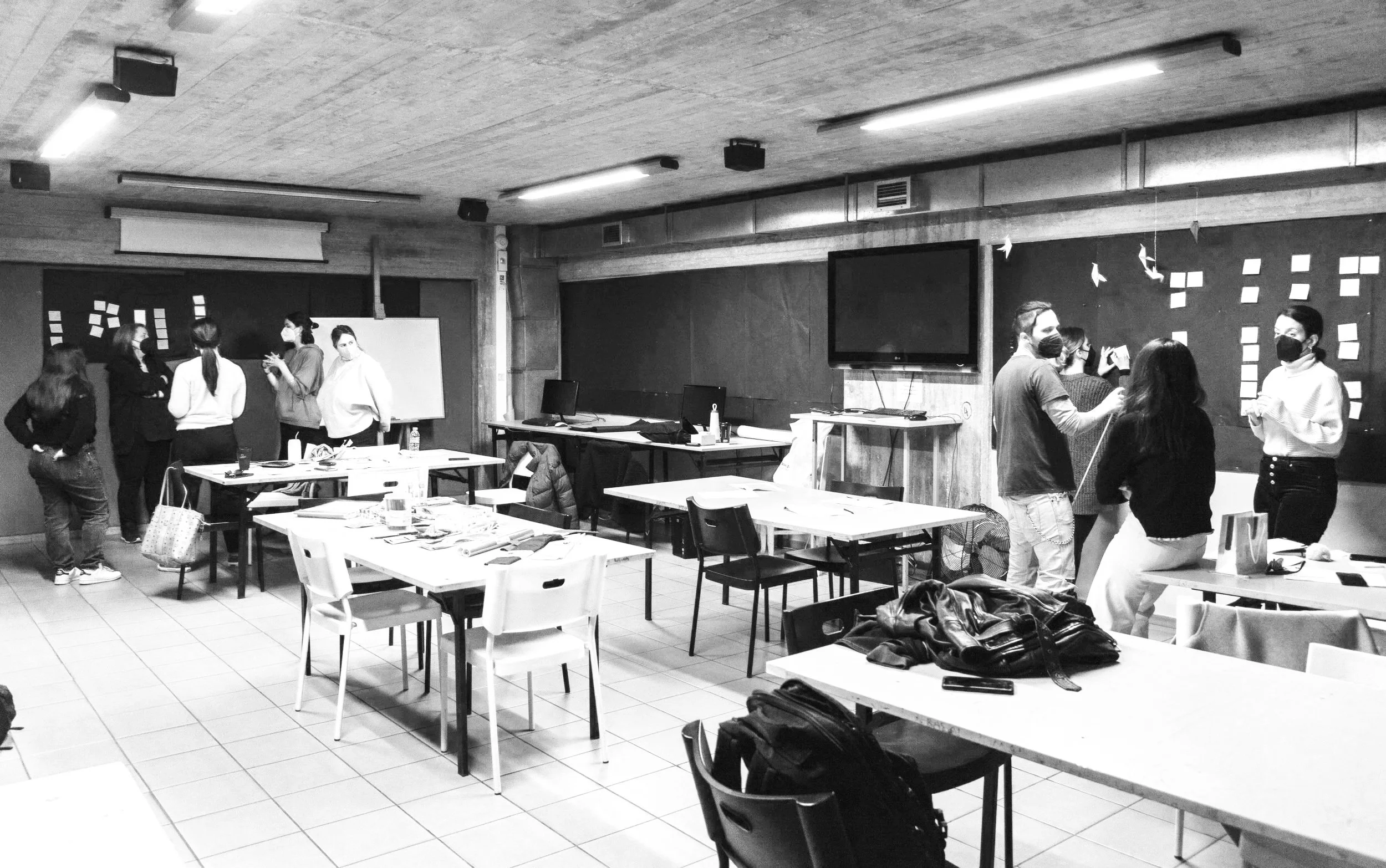
In the MA User Experience Design module at Vakalo, we spend the first lessons on something that has nothing to do with software.
We talk about society.
Not in a vague, theoretical manner. In a very specific, uncomfortable way. We examine who is included in the systems we design and who is quietly excluded. We discuss an elderly person who cannot complete a government form online because the contrast ratio on the input field is too low for their vision. The non-native speaker who abandons a checkout flow because the error message assumes a level of language fluency the interface never bothered to test for. The single parent trying to book a GP appointment at 11 pm on a phone with 4% battery, on a website that was designed by someone who has never had to do that.
Within the first lesson of teaching UX at the MA level, something shifted in the room. Students stop asking "how do I design this?" and start asking "who is this for, and what is their life actually like?" This question, one shift in orientation, separates a UX practitioner from a UX designer. No AI tool in the world will ask this for you.
This is what I mean when I refer to social design as the foundation of UX education. Not as an elective. Not as a module on accessibility tucked in at the end of the semester. As the lens through which everything else is taught.
What I have learned after years of watching students move from learning UX to practising it: the technical skills transfer quickly. Information architecture, interaction patterns, usability testing, and prototyping are all learnable. Some students pick them up over weeks. What takes much longer and what makes the real difference in the work is the capacity to hold another person's reality in your mind while making decisions about their experiences.
That is a human skill. A social skill. A skill that requires you to have thought seriously about power, about access, about who the Internet was built for, and who has had to adapt themselves to fit it. Once you have considered these aspects, they inform every design decision you make. The color contrast ratio isn't a measure of compliance for a person. That’s a person. The error message is not a string of copy; it is a moment of failure that someone is experiencing alone, probably already frustrated, and possibly in a hurry.
Everything in UX is interconnected. The research connects to the persona, which connects to the flow, which connects to the interaction, which connects to the copy, which connects to the test, which connects back to the research. However, underneath all of this, holding it together is a question about people. Who are they? What is their life like? What is the cost to them when this does not work?
AI tools will accelerate every part of the process that can be accelerated. The speed of wireframes, variants, content generation, usability analysis, and all of it is changing faster than any curriculum can track. But the moment before the tool, the moment when a designer decides what problem is actually worth solving and whose experience is actually worth protecting, that moment is entirely human. And it always will be.
That is what I try to provide my students. One semester at a time.