On feedback at the wrong altitude
Not all feedback is useful. Most designers learn this slowly, and usually the hard way. In the early stages of a project, feedback arrives in abundance. Everyone has an opinion. Everyone sees something they would change. “Make it more modern.” “It needs to feel more premium.” “I’m not sure about this.” None of these are wrong. None of them are actionable either.
The problem is not the intention. It is the altitude.
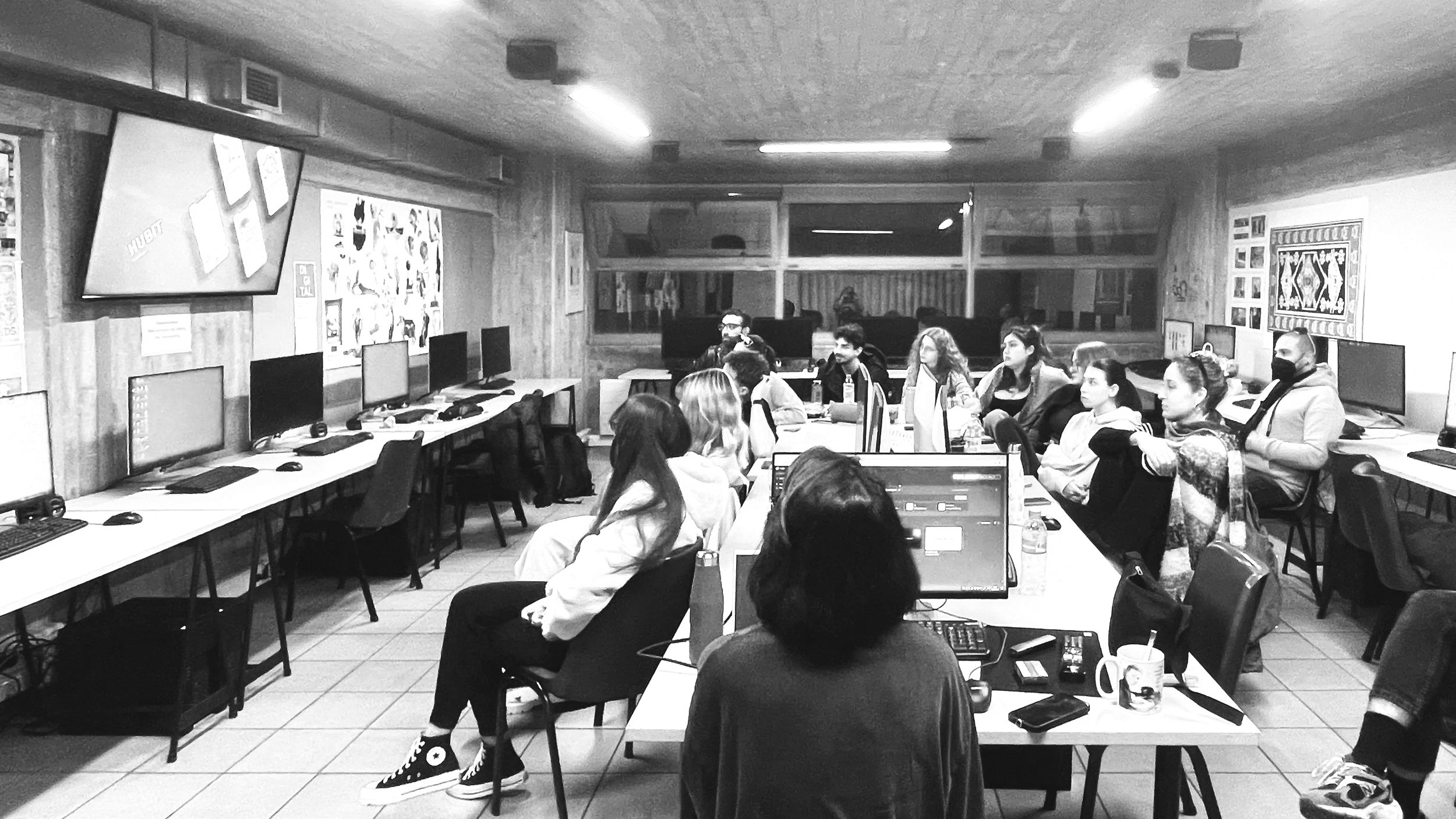
This kind of feedback floats above the work. It reacts to it without ever entering it. It names a feeling, but not the reason behind it. It is not quite a direction. Not quite a criticism. Not quite an opinion, even. It is weather. Good feedback flies lower. It sits close to a decision, connects what was attempted with what actually happened, and names the gap between them. “This feels unclear because I don’t know what happens after I click here.” “I can’t tell what matters first.” “This sentence assumes something I don’t know yet.” You can work with that. It gives direction without handing you the solution. It sharpens the problem instead of replacing it. In the classroom, the first round of peer feedback almost always comes in at cruising altitude. Students repeat what they have heard before, or what they think feedback is supposed to sound like. “Maybe make it more engaging.” “I like it, but something feels off.” It is polite, careful, and entirely safe.
Safe feedback does not move the work forward.
So we slow down. Instead of asking what they think, I ask them to locate a moment: the exact point in the flow where they hesitated, stopped, or expected something else. This is harder than it sounds. It asks them to stop reacting and start observing, which, it turns out, are different muscles. The first attempts are long, quiet, and slightly painful for everyone involved, including me. Then something shifts. They stop commenting on how things look and start noticing how things work. “I don’t know what my options are on this screen.” “I expected this to go back, not forward.” “This feels like a dead end.” The feedback lands, because now it has somewhere to land. That is where the real learning happens. Giving good feedback requires exactly the same skill as making good design decisions: holding someone else’s intention in your head while judging its outcome.
Critique is not separate from practice. It is practice.
There is a catch, and it is usually mine. Vague feedback often starts with a vague brief. If the goal is undefined and the audience abstract, everything becomes a matter of taste, and “make it better” becomes the default note. When the brief is precise, feedback has something to attach to. The question changes from “do I like this?” to “does this work for them?”, and the ego quietly leaves the room. The students who improve fastest are not always the most visually skilled. They are the ones who learn to see, and then to say what they see. They stop adjusting by feel and start adjusting with intention. The same is true of teams. A team that cannot give clear feedback rarely produces clear work. A team that learns to talk about decisions, trade-offs and consequences moves faster, with far less friction, because the work is no longer defended. It is examined. That is a very different posture, and it can be learned.
Margin note: Next time you give feedback, before you say how it feels, say where. Point to the moment. If you can’t find one, you are probably still at cruising altitude.
This is the critique method we use in the professional digital design course, and in the Digital Product Design workshop for teams. See how the workshops work →