Plaisio | Enhancing Digital Skillset
For the three-month workshop, participants significantly enhanced their digital skills by focusing on key areas such as digital marketing, design thinking, AI tools, and team building. Each week offered in-depth sessions, blending theory with practical exercises to ensure a well-rounded learning experience. They engaged in collaborative projects, applied innovative AI tools, and strengthened their problem-solving abilities through design thinking frameworks. By the end of the workshop, participants were equipped with actionable insights and a clear roadmap for applying these skills in their professional environment, as was the goal for the workshop.
What we achieved
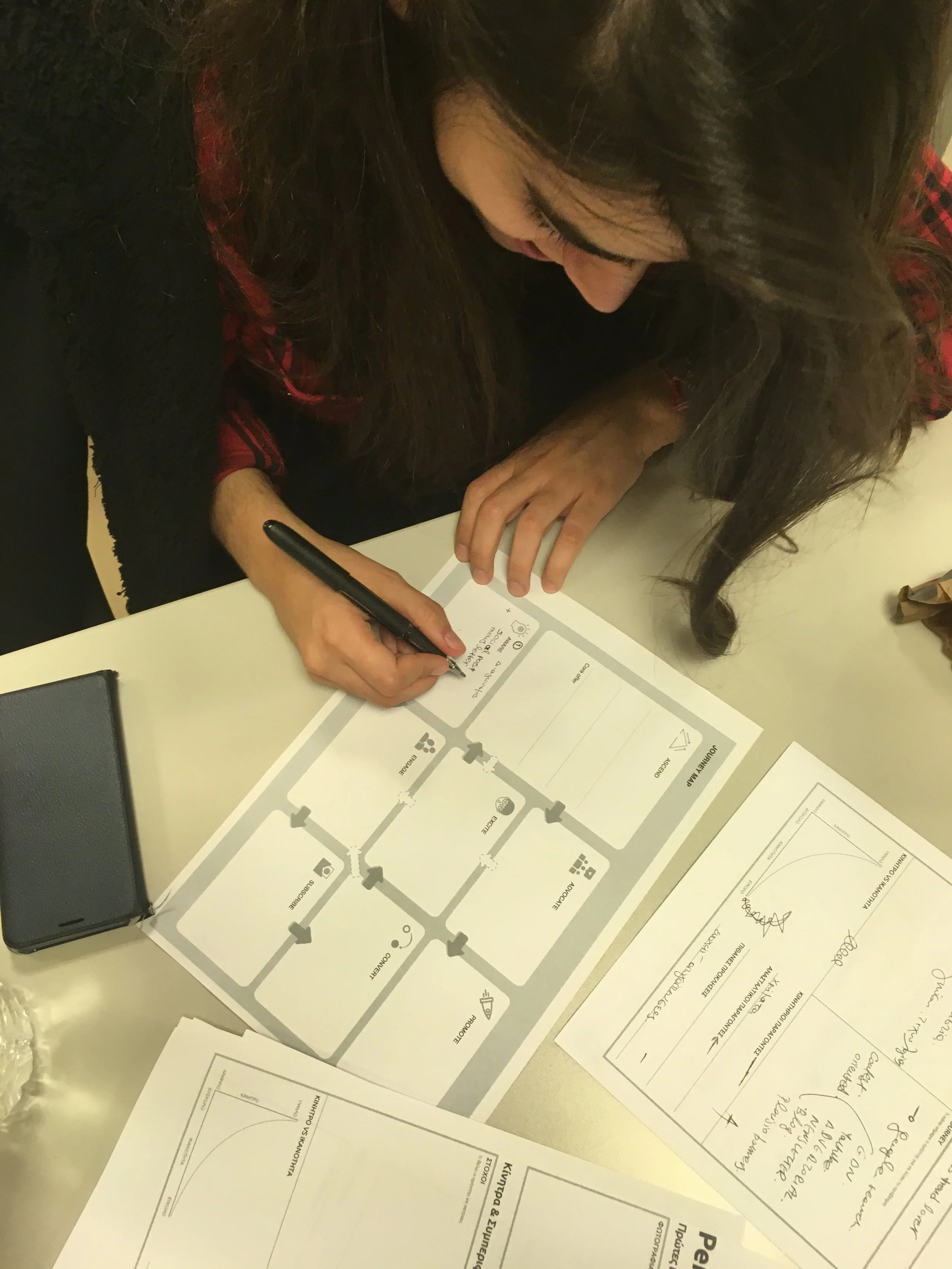
The goal was never to teach people about digital. It was to make them capable of doing something with it.
Goal 1 | Digital fluency across the organisation. Participants entered the programme at varying levels of digital confidence. By the final week, the gap had closed significantly. Every participant left with a working understanding of digital marketing principles, the tools that power them, and critically, the language to engage with digital strategy as an active contributor rather than a passive observer. Digital literacy became a shared organisational asset, not the preserve of a specialist few.
Goal 2 | Design thinking embedded in everyday problem-solving. One of the programme's central ambitions was to make design thinking a reflex, not a reference. Through weekly frameworks, collaborative exercises, and real problem sets drawn from participants' own professional contexts, the methodology moved from concept to habit. By the end of the programme, teams were applying empathy mapping, rapid ideation, and structured prototyping to challenges that had nothing to do with design, and everything to do with how their organisation works.
Goal 3 | Confident, practical engagement with AI tools. AI tools were introduced not as a technology trend to be aware of, but as a practical layer of capability to be used. Participants explored tools relevant to their roles, tested them against real tasks, and developed a critical framework for evaluating new tools as they emerge. The goal was not mastery of any single platform; it was the confidence to engage with an evolving landscape without anxiety.
Goal 4 | Stronger, more creative teams. Team building was woven through the programme rather than treated as a standalone module. Collaborative projects, cross-functional exercises, and shared creative challenges built something that skills training alone rarely does: trust. Participants learned how each other thinks, how each other works under pressure, and how to draw on each other's strengths more deliberately. The team that finished the programme was measurably more cohesive than the one that started it.
Goal 5 | A clear roadmap for what comes next. Every insight generated during the programme was anchored to the application. The final weeks focused on synthesis, helping participants translate what they had learned into a concrete, personalised roadmap for their professional environment. They left not with a folder of notes but with a plan: specific tools to implement, frameworks to apply, and habits to build. The measure of a good workshop is not what happens in the room. It is what happens after.